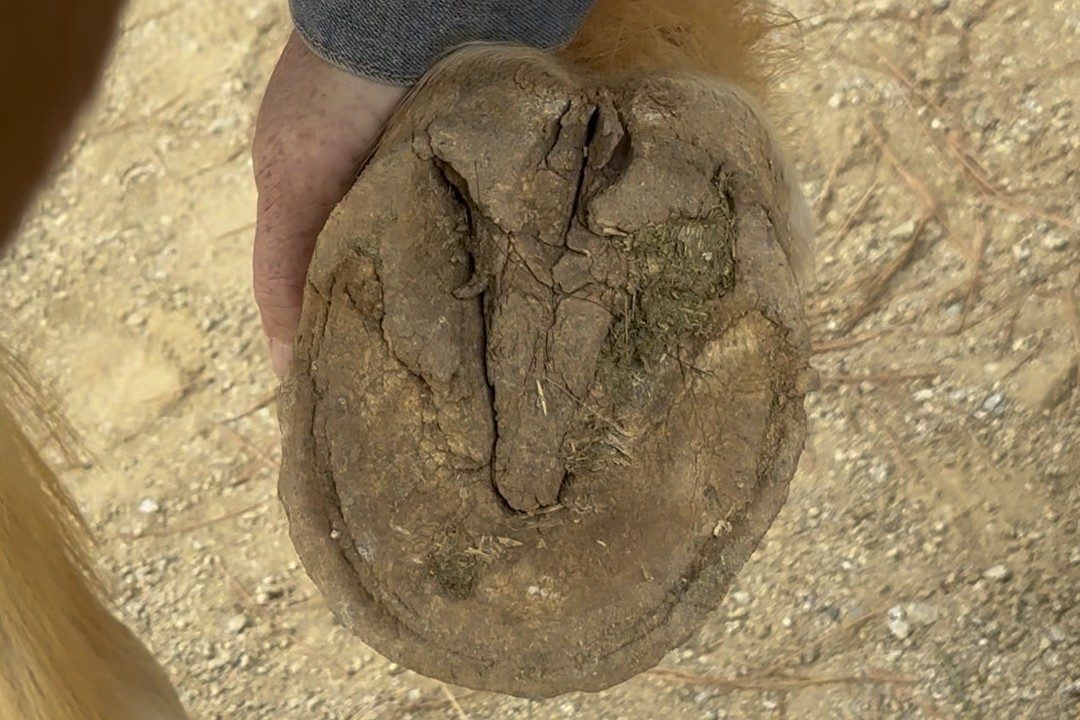
"When was his last trim?"
Your farrier asks it with one hoof already between his knees, or you ask yourself in the barn aisle, looking at a toe that seems long. You think it was early last month. Maybe the month before. The invoice is somewhere in the truck, and the text thread with the farrier is buried under forty messages about hay. This is the question a farrier reminder app should answer, and most of us don't use one.
Nobody plans to let a horse go eleven weeks. It happens one small delay at a time. The farrier pushes a week because of rain. You push a week because of a show. Then nobody remembers to rebook at all, until a shoe turns up in the pasture.
The fix isn't more discipline. It's a schedule that remembers for you.
Why farrier cycles slip
Most riders keep the farrier schedule in one of three places: a whiteboard in the tack room, the phone's calendar, or their head. Each works for a while.
The whiteboard is fine until someone wipes it, or until you're at work and need to know if Friday is the day. The phone calendar is fine for one horse. Add a second horse on a different cycle, one shod in front and one barefoot, and you're making separate entries and hoping you set them to repeat. Memory works for exactly one cycle, maybe two.
And the cycle itself is a moving target. Six weeks in summer, maybe eight in winter. A horse coming back from time off needs something different from the one you're riding five days a week. That's between you and your farrier. The problem is just keeping track once you've decided.
The trouble is rarely a missed appointment. It's the appointment that was never booked, because the reminder was supposed to come from somewhere and it didn't.
What a farrier reminder app should do
A useful farrier reminder app doesn't ask you to log anything new every week. You set it up once, and it keeps repeating until you change it. That's how farrier appointments work in EquiNex care records.
Set the cycle once
Create a farrier appointment and choose whether it's one-time or repeating. Repeating appointments run every 3 to 12 weeks, with 6 weeks as the default. Pick the interval you and your farrier agreed on, and the next appointment is already there when this one is done. No re-entering the date after every visit.
Record what was done
Each appointment records whether it's a trim and which hooves get shoes. So "fronts only" or "all four" is written down instead of remembered. When the farrier asks what he did last time, or a new farrier takes over, the answer is in the app, not in your head.
The horse's profile also holds the farrier's contact, next to the vet and owner contacts. When you need to call, you aren't scrolling through your phone for "Mike horseshoer" or "Mike farrier" or just "Mike."
Add your farrier's comments and recommendations to the horse's notes ("left front heel is running low, try five weeks next time") and they become part of the horse's record, which EquiNex's AI consultant knows. Next cycle, you can simply ask it: "What did the farrier say last time?"
Copy it to the rest of the barn
If your farrier does three horses on the same visit, you don't have to build three appointments. Farrier appointments can be copied to other horses. Set it up for one, copy it, and the barn is on schedule. Change what's needed for the horse that's barefoot, and you're done.
A reminder the day before
On the paid plans, EquiNex sends a push notification to your phone 24 hours before a farrier appointment. That's enough time to make sure the horses will be in, not out on the back forty, and that someone will be there to hold them.
To be clear about the limits: care reminders are push notifications only. There are no text or email reminders for farrier visits, so keep notifications on for the app. And the app doesn't book your farrier. It tells you when the visit is due; you still make the call. Booking the visit for you, or texting your farrier a reminder, are on our list for the future, but not here yet.
Everyone at the barn sees it
If you share horses with a partner, a barn manager, or a teenager who does the evening chores, invite them to your barn with a QR code, link, text or email. Everyone on the team sees the horses, schedules and records. So when the farrier pulls in on Tuesday and you're at work, whoever is at the barn already knows he's coming and which horses he's there for.
For the chores around the visit, like "bring Dusty and Rio in by 8," a barn task can be assigned to a teammate with a reminder at the lead time you choose, and "notify me when completed." You get a note when it's done, and the record shows who did it and when. Plans limit how many people and horses you can add, and the free plan covers one of each.
The part that's still on you
Keep it small. Three habits, each a few seconds:
- When you set up a horse, set its farrier appointment to repeat at the interval you and your farrier agreed on.
- If the visit moves because of weather or a show, change the date in the app while you're still on the phone with him.
- If your farrier changes the cycle, change the interval. That's it.
No spreadsheet, no logbook, no Sunday-night review. The schedule keeps running on its own.
The app has nothing to say about how your horse's feet look. That's your farrier's call, and your vet's when something seems wrong. What it does is make sure the farrier actually shows up on time, every time, so he can do his job. A farrier reminder app is a small thing. So is a week here and a week there, until they add up.
Your horse can't tell you it's been nine weeks. The app can. And if you ride as much as you care for, the same app records your trail rides too, so the rides and the care records for each horse live in one place.