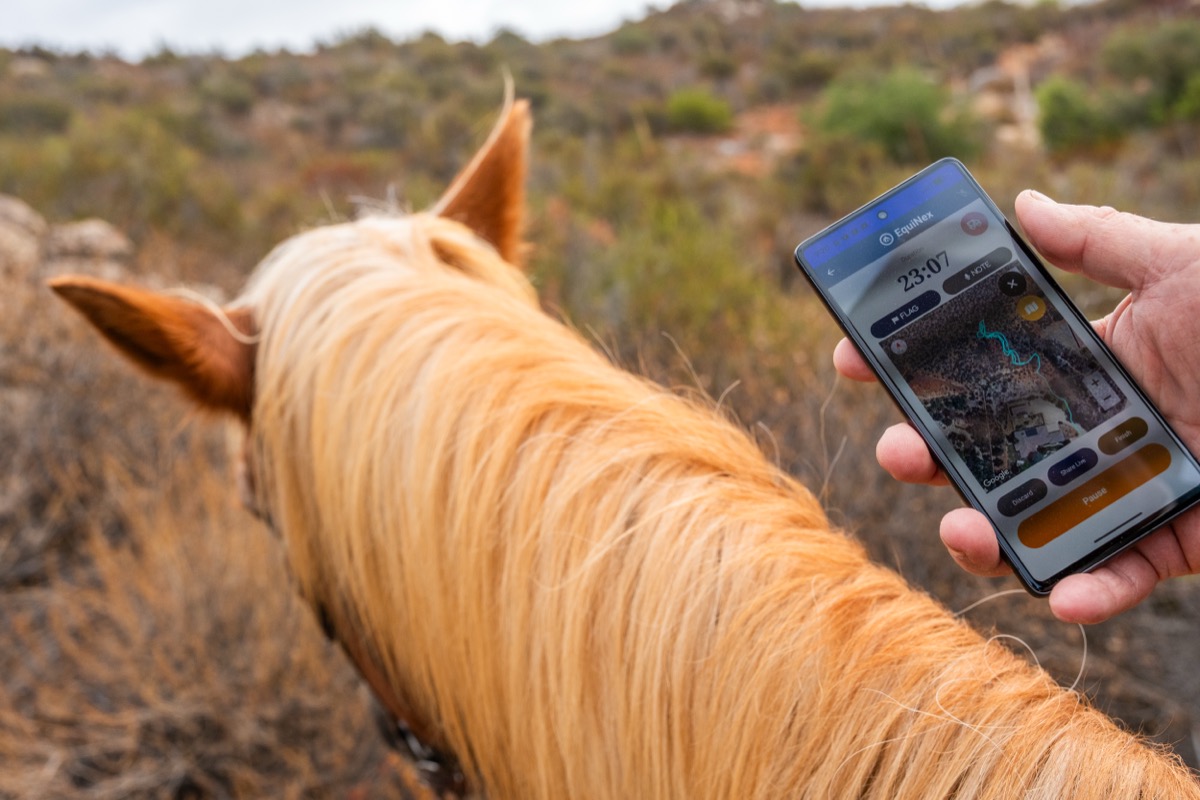
Most advice about a horseback riding route planner assumes you will sit down before every ride with a map, study the terrain, mark decision points and write out a plan. Be honest: when did you last do that? Most of us ride the loop we know, follow a friend who knows the way, or haul to a trailhead and figure it out as we go.
That isn't carelessness. It's how riding works. The horse is tacked, the day is short, and nobody wants homework before a ride. A route planner that only helps people who plan is a route planner most riders will never use.
So let's flip it: what if the planning happened while you ride, and the plan was waiting for you the next time?
What riders actually do
Watch a barn on a Saturday morning and you'll see the same pattern. Riders pick between two or three familiar loops based on the weather, the time they have and how the horse feels. Once in a while they try something new, usually because a friend recommended it. Everything they know about those trails lives in their heads: where the water is, which gate sticks, where the footing gets rocky after rain, where the neighbor's dogs come out.
None of that is written down anywhere. It isn't in a guidebook or on a public trail map, and it changes from one season to the next. The loop behind the barn, a neighbor's permission route, a logging road that's only passable in the fall: that's the country most of us ride, and no generic trail app knows it.
That works right up until it doesn't. You forget which fork led to the washout. A barn friend asks how to find the creek crossing, and "past the big oak, then left, I think" is the best you can do. Your young horse needs the easy loop this week, and you can't remember which one had the steep descent.
A horseback riding route planner that builds itself
EquiNex takes a different approach. It doesn't ask you to plan. It records what you already do, and makes it easy to add the details that matter while they're fresh.
Every ride can become a trail
Start a ride and put the phone away. EquiNex records your route. When you get back, one tap saves that ride as a trail in your library. Next time, you can retrace it with the route drawn on your map. And on a trail system you don't know well, trails from your library near you show up on the ride map, so a wrong turn doesn't turn into a long afternoon.
Flag it in two taps
Tap the flag button and pick what you found: water, gate, hazard, steep, rest, parking or junction. The spot is marked on your route and you keep riding. A photo works too, pinned to the exact place you took it. If you're sharing your ride, your flags and photos also show up on your emergency contact's map as soon as you have signal, without you checking whether they went through.
Say it instead of typing it
Nobody types well with gloves on and the reins in one hand. Leave a voice note instead: "Bridge washed out, go around on the left." It's saved at that spot on the map, and you can play it back later.
Forgot? Add it after the ride
Sometimes you're too busy riding to flag anything. One rider rode straight into a bees' nest and only thought about marking it once safely home. That's why flags can be added after the ride: slide back along your recorded route to where it happened and drop the flag right there.
Choosing today's ride in ten seconds
A pile of saved trails is only useful if you can find the right one quickly. Tag your trails with the built-in tags (favorite, easy, moderate, difficult, scenic) or make up your own: "shade," "young horse OK," "no bikes," "good footing after rain." Then filter your trail list by tag and distance.
Hot afternoon with a green horse? Filter for "shade" and "easy," under five miles. Conditioning day for your seasoned gelding? "Moderate" and longer. The decision that used to happen from memory now takes a few taps, and it's based on what you actually found on those trails, not what you vaguely remember.
It connects to the horse, too. EquiNex keeps each horse's rides next to its care record, so you can see what the horse did last week before you choose this week's loop.
What planning is still worth doing
A little planning still pays off, as long as it stays small:
- Tell someone where you're going and when you'll be back, or let EquiNex share your ride with them. Here is the practical way to share your trail ride location.
- On a trail system you don't know, look at the map once before you leave, and note where you parked.
- On hot days or with a horse that isn't fit, know your turnaround point before you start.
That's about as much as most riders will do, and that's fine. The rest can happen along the way.
The best horseback riding route planner is the one that doesn't feel like planning. Ride, flag what matters, save the trail, tag it. Over a season you end up with a trail library that knows your country as well as you do, and one you can hand to the barn friend who asks how to find the creek crossing.