What a Coggins test actually is
Most owners know they need one. Fewer have been told what it tests for or why the rules are so strict.
The disease: equine infectious anemia
A Coggins test checks a horse's blood for antibodies to equine infectious anemia (EIA), sometimes still called swamp fever. EIA is a viral disease. It spreads through blood, mostly by large biting flies like horse flies and deer flies carrying a little blood from one horse to the next, and by shared needles or equipment that touch blood.
There is no vaccine and no cure. An infected horse carries the virus for life, and many carriers look completely healthy, which is exactly why testing exists: you can't tell by looking. Some horses do show fever, anemia, swelling of the legs or belly, and weight loss. If you see those, call your vet; don't wait for the annual test.
EIA is a reportable disease. A positive horse is reported to state animal health officials, and the outcome is set by state and federal rules: usually strict lifelong quarantine well away from other horses, or euthanasia. That's why event organizers, boarding barns and state lines take the paper so seriously.
Where the name comes from
The test is named for Dr. Leroy Coggins, who developed the agar gel immunodiffusion (AGID) test for EIA at Cornell University around 1970. Today labs approved by the USDA run either that test or an ELISA version. Your vet draws a tube of blood, fills out the official form with the horse's description and markings, and sends it to an approved lab. Results usually come back within a few days, though busy seasons and weekends can stretch that.
How long a Coggins is good for
This is where people get caught. There is no single national expiration date. Each state, and each event or facility, sets its own rule. The common patterns, per state veterinarians and university extension services:
- Interstate travel: most states want a negative test drawn within the last 12 months. Some ask for 6 months.
- Health certificate (CVI): crossing state lines usually also needs a certificate of veterinary inspection, which is typically valid only for about 30 days. It's a separate document from the Coggins.
- Shows, organized trail rides, clinics: set their own rules, often 12 months, sometimes 6.
- Boarding barns and sales: many require a current negative test on arrival or at change of ownership. Some states require it by law for a sale.
| Situation | Usual requirement | Check with |
|---|---|---|
| Riding at home, no travel | Often none by law; many barns want one yearly | Your barn |
| Crossing a state line | Coggins within 12 months (some states 6), plus a health certificate | Destination state's animal health office |
| Show, clinic, organized ride | Usually 12 months, sometimes 6 | The event |
| Selling or moving barns | Current negative test, often required | Your state and the new barn |
Rules change, and your vet or the destination state's animal health office has the current answer. Ask before you haul, not at the gate.
Where owners go wrong
- Counting from the wrong date. The clock generally runs from the day the blood was drawn, not the day the results came back or the day you picked up the paper.
- Testing too close to the trip. If you call the vet three days before a ride, lab turnaround can sink you. Give yourself a couple of weeks.
- Mismatched paperwork. The form describes the horse: color, markings, sometimes a drawing or photos. If the description doesn't match the horse in your trailer, expect questions.
- Assuming 12 months everywhere. A 10-month-old Coggins is fine for a lot of places and too old for some.
What EquiNex does as a Coggins expiration reminder app (and what it doesn't)
Straight answer first: EquiNex has no dedicated Coggins tracker. It doesn't read your lab results, it doesn't know your state's rules, and it doesn't send an automatic "your Coggins expires on this date" alert. It also doesn't store documents just yet, so the signed paper itself stays with you; that's coming soon.
What it does have is enough to make sure the date doesn't sneak up on you.
A yearly "Update Coggins" task with a reminder
In barn tasks there's a ready-made template called "Update Coggins" that repeats every year. Add it for one horse or the whole barn, give it a due date, and turn on a reminder. Reminders are push notifications on your phone (part of the paid plans), and you choose the lead time, up to a day before.
Because the reminder comes at most a day early, here's the trick: don't set the due date on the expiration date. Set it two or three weeks before, so the notification means "call the vet now," not "you're out of date tomorrow." Next year the task repeats on its own.
If someone else handles the vet, assign the task to them and tick "notify me when completed." When it's done, the record shows who did it and when, with their notes. There's also a "Prepare Coggins & health certificate" template for the trip itself, so the 30-day certificate doesn't get forgotten either.
"Coggins test" as a vet visit reason
When you book the vet visit, pick "Coggins test" from the list of visit reasons, alongside core vaccines, rabies or a dental float if they're happening the same day. You can book one horse or several at once. With a paid plan you get a push reminder 24 hours before the appointment, and the visit goes into each horse's vet history, so the draw date is written down somewhere besides your memory.
Just ask
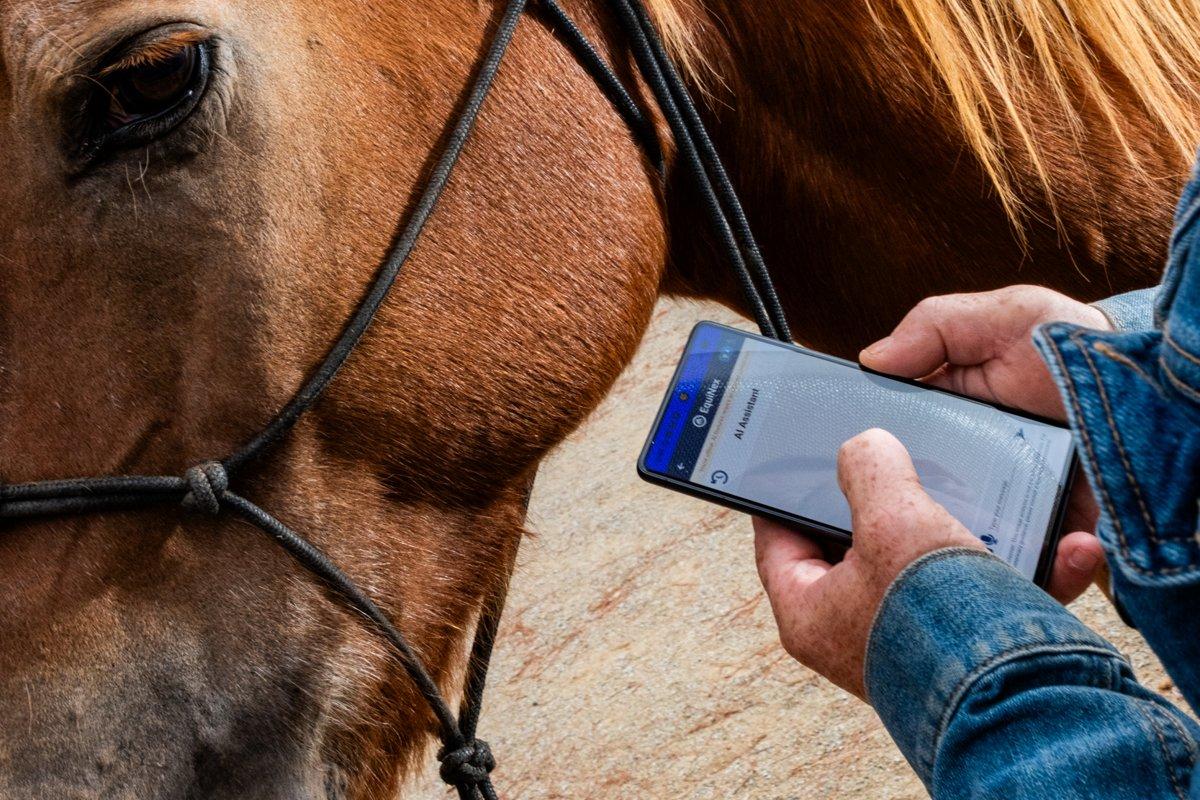
The AI consultant knows each horse's records, including vet visit reasons from the past two years and upcoming appointments. Ask "When was Nelson's last Coggins?" or "Do I need to schedule anything for Nelson?" and it answers from what's in the app. It also reads the horse's recent notes and the notes on each appointment, so typing "Coggins drawn April 12, negative, paper in the trailer" into a note makes that part of what it can tell you later. It's only as good as what you record, same as a binder. More on that in a horse veterinary records app you can just ask.
Everyone you invite to the barn sees the same horses, schedules and records, so the barn manager doesn't have to text you to ask.
Three habits that take seconds
- On the day the vet draws blood, record it: a vet visit with "Coggins test" as a reason, or at least a note with the date.
- Set the yearly Coggins reminder to come due two to three weeks before the anniversary of the draw, not on it.
- When the signed paper comes back, take a photo with your phone and keep the original in the trailer.
That's all. No spreadsheet, no binder audit. If you're still running the barn on paper, here's how a barn app compares to paper binders.
Why it's worth the thirty seconds
The Coggins test exists because a healthy-looking horse can carry a disease that can't be cured, and one infected horse at a crowded event puts every horse there at risk. Keeping yours current is part of how the whole horse community keeps EIA rare.
It's also about your own weekend. Being sent home from the gate with a loaded trailer, or a new barn that won't take your horse off it, is a bad way to learn your paper ran out last month. A reminder that shows up three weeks early turns that into a phone call to the vet, which is all it should ever be.