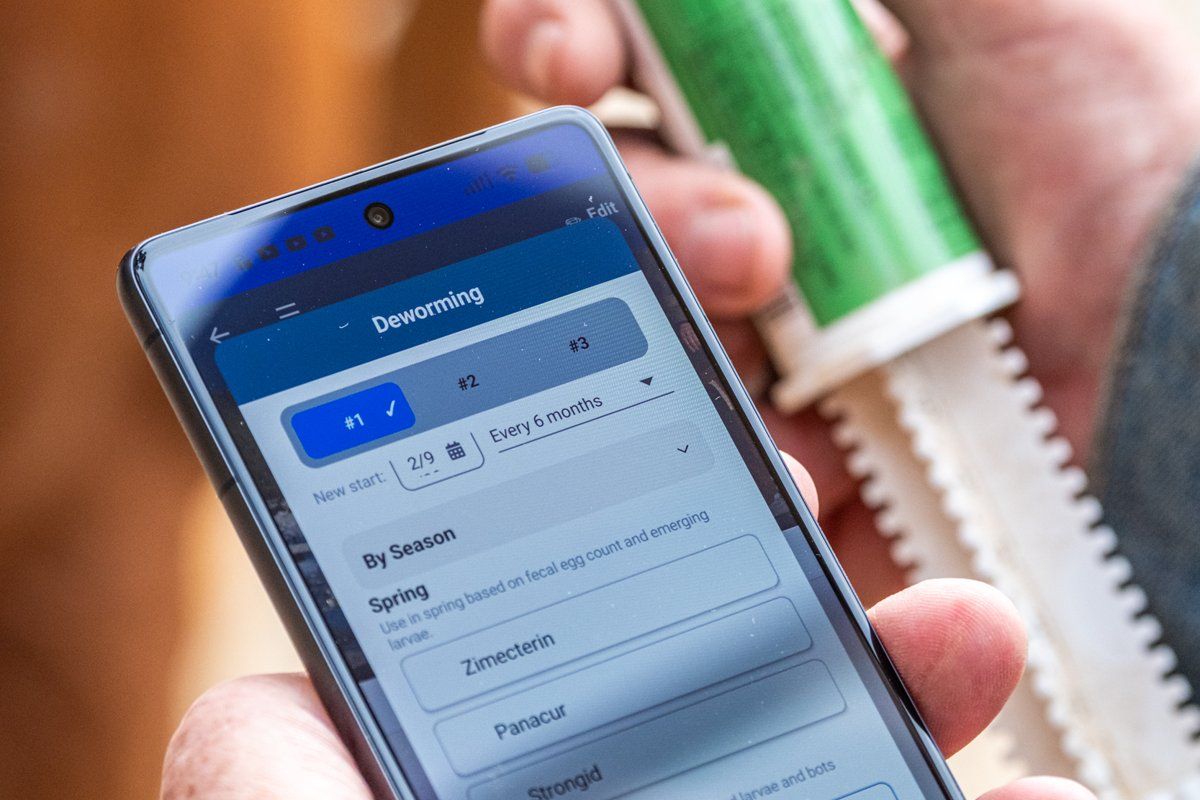
It's Sunday morning in the feed room. You have a tube of paste dewormer in one hand and a halter in the other, and one question: is this the same stuff you gave him last time? If you've ever gone looking for a horse deworming schedule app, it probably started with a moment like that.
You remember deworming him. Sometime in the spring. Maybe early summer. The tube was blue, or was that the one from the tack shop sale? The box went in the trash weeks ago.
That isn't sloppy horsekeeping. It's what happens with a two-minute job that comes around a few times a year. Nobody remembers the details of something they did four months ago in between mucking stalls and filling water buckets.
Where the usual system breaks down
Most riders track deworming in one of a few ways. A date scribbled on the feed-room calendar: "wormed." An empty box saved on the shelf. A note on the phone, buried under grocery lists. Or plain memory, which is what most of us actually use. Some people set a reminder in their phone's calendar, but honestly, none of the horse people I know do. Repeating reminders aren't that easy to set up, and who wants the mental gymnastics of working out when the next Zimecterin or the next Quest is due?
The date is the easy part. The hard part is the drug. Most horse owners alternate dewormers, so the real question at the barn isn't just "when?" It's "which one did he get last time?" Dewormers are sold under different brand names, and the label on the tube is not the same thing as what's in it. Two tubes that look different can share an active ingredient. Two that look alike may not. If your vet has you on a plan that depends on what your horse got last, "the blue one" doesn't help anybody.
It gets worse with more than one horse or more than one person. A boarder does her own mare. The barn manager does the rest. A teenager helps out on weekends. Three people, three memories, no single record. Sooner or later a horse gets done twice, or not at all.
Then there's timing. The next dose isn't on anything you look at every day, so it slides. A week late becomes a month late, and you only notice when you find the unopened tube in the tack trunk.
What a horse deworming schedule app should remember for you
EquiNex doesn't tell you which dewormer to use. That's your vet's job. What it does is remember what you gave, and tell you when the next one is due. It lives in the horse care records, alongside each horse's vet visits, farrier appointments and feed plan.
Pick the dewormer by season, class, parasite or ingredient
When you schedule deworming, you pick the product from a catalog you can browse four ways: by season, by class, by parasite target, or by active ingredient. Each product shows its active ingredient. No typing brand names off a crumpled box, no guessing at spelling. And because most of us rotate, a horse's schedule can hold up to three dewormers, each with its own start date and repeat, and each showing when it's next due. The next time you're standing in the feed room with a tube in your hand, the horse's schedule tells you what was chosen, product and active ingredient, instead of "the blue one, I think."
Set the repeat once
Choose how often it comes around: once, every 4 weeks, every 2, 3 or 6 months, or yearly. Whatever interval your vet recommends, you set it one time and it keeps going. It shows on the horse's schedule and on the calendar, so the next dose is sitting where you'll see it, not in your head. If your vet's plan calls for a different product next time, schedule that one too, and each entry keeps its own product and active ingredient.
A reminder on the morning it's due
On the paid plans, EquiNex sends a push notification to your phone at 6 AM on the day deworming is due. That's before you head out to feed, so the tube can go in your jacket on the way to the barn. Plainly: this is a push notification on the phone. There's no email or text reminder for care, so if you've turned off notifications for the app, you won't see it.
Everyone at the barn sees the same schedule
Invite the people who help with your horses to the barn with a QR code, a link, a text or an email. Everyone on the team sees the horses, their schedules and their records, so the weekend helper can check what's due instead of texting you to ask. The number of people and horses depends on the plan; the free plan covers one person and one horse.
Running low on dewormer is its own small problem. A barn task like "buy dewormer" can have a due date and a reminder, be assigned to a team member, and notify you when it's done. The completed task records who did it and when, with notes. If your helpers use the app in Spanish, German, French or Portuguese, tasks you write are translated for them automatically.
The vet's number is right there
Each horse's profile holds his vet and farrier contacts, along with medical conditions, dates and notes. When you have a question about the plan, you're not scrolling through old texts to find the clinic's number.
The part that's still yours
An app can remember a schedule. It can't write one, and it shouldn't try. Which products to use, in what order, how often, whether to test first: those depend on your horse, your region and your pasture, and they're a conversation with your vet. Have that conversation, then put the result in EquiNex once.
After that, the habits are small:
- Pick the dewormer in the app when you schedule it, not afterward from memory.
- Keep notifications on for EquiNex so the 6 AM reminder actually reaches you.
- Bring the horse's schedule up when you talk to the vet, so "what did he get last?" has a real answer.
That's it. No spreadsheet, no clipboard in the feed room, no saving empty boxes. It's the same idea as a route planner that builds itself as you ride: record what you already do, and let the app do the remembering.
Your horse can't tell you what he got in April. Deworming is one of the quiet routine jobs that keeps him healthy, and it only works if it happens on time, with whatever your vet actually recommended. A record everyone at the barn can see is what makes that possible, whether you're doing it yourself or leaving it to the person feeding while you're away.
A horse deworming schedule app won't make the decisions for you, and it doesn't replace your vet. But it closes the gap between "I'm pretty sure I did him in the spring" and knowing exactly what went in, when, and what's due next. That's the part most of us were never going to keep in our heads anyway.