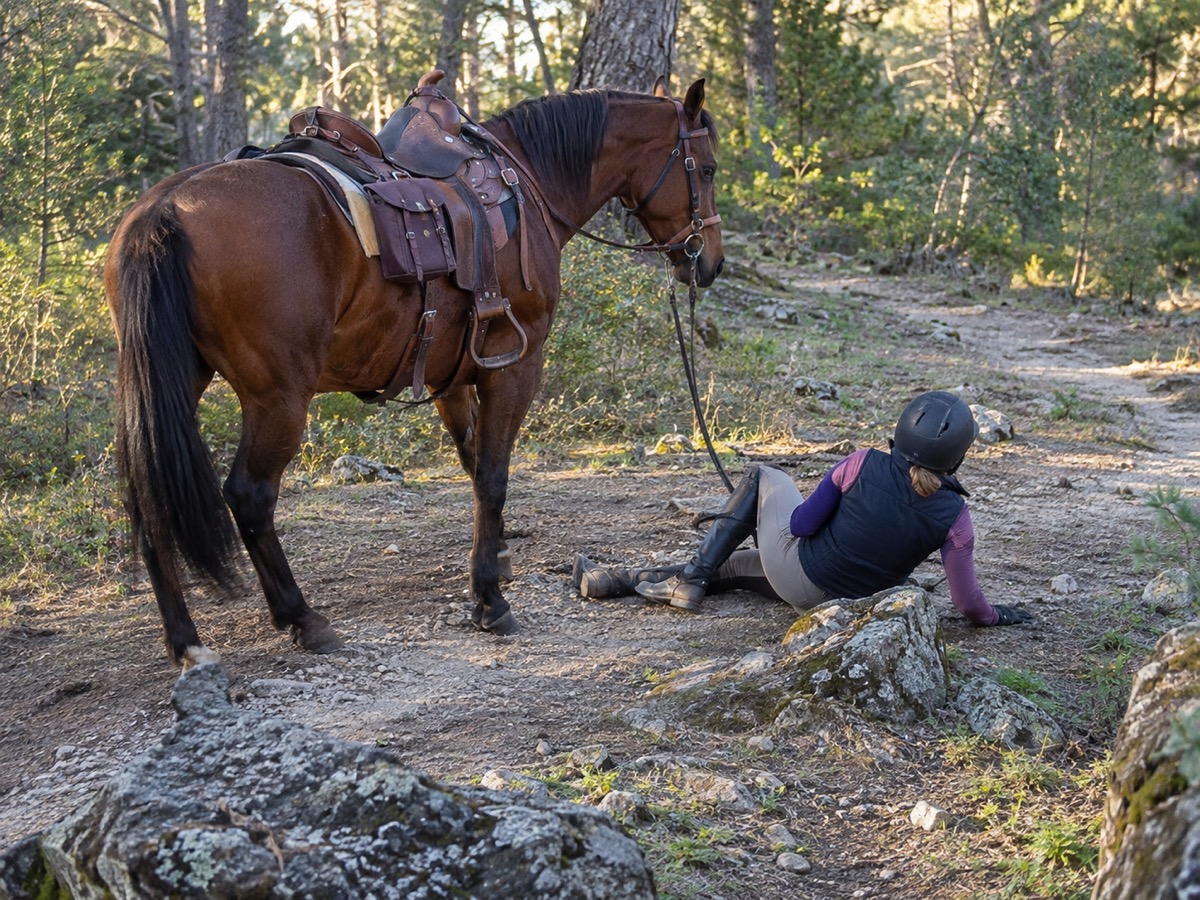
A horse fall detection app is not a substitute for good judgment, a helmet, or telling someone where you are headed. It is a layer of protection for the moment when a quiet solo ride stops being routine: a spook near a road, a bad step at a water crossing, a rider separated from the horse in thick timber. The right system gives the people who need to know a clear chance to act quickly, with enough information to find you.
Generic running apps were not built for that job. They can record mileage and a route, but a horseback fall has different motion, different speed changes, and different consequences. A useful app has to understand the difference between a horse stopping abruptly, a rider dismounting at a gate, and an event that may require help.
What a horse fall detection app needs to recognize
A fall alert begins with motion data from the rider's phone. The system looks for a pattern that may indicate a fall: a sudden impact, an unusual change in elevation or motion, followed by stillness or separation from normal ride movement. That sounds straightforward until you consider real riding.
A horse can spin, stop hard, scramble on uneven ground, or step off a small bank. A rider may jump down to open a gate, take a photo, adjust a saddle, or lead through a questionable section of trail. Any app that treats every sharp movement as an emergency will create false alarms people soon learn to ignore.
That is why cancellation time matters. After a possible fall is detected, the rider should receive a loud, obvious prompt and a short window to cancel the alert if they are safe. If they cannot respond, the system should share the emergency notification and current location with selected contacts.
The goal is not to claim perfect detection. No phone-based system can guarantee that every fall will be identified, especially if a device is damaged, has no battery, loses cell coverage. The goal is to reduce the time between a serious incident and a person knowing where to begin looking.
A useful alert includes more than a pin on a map
“Something happened” is not enough when a spouse, barn manager, or friend is trying to respond. An actionable alert should identify the rider, show the most recent available location, and make it clear that the alert came from a possible fall during an active ride.
Live location sharing matters here. A rider may be moving after a fall, may have remounted and tried to reach a safer place, or may be off the original route entirely because the horse bolted. The contact needs the latest practical information, not a vague memory of the planned loop.
The best setup also keeps emergency contacts intentional. Choose people who can answer their phone, understand your usual riding area, and know when to call local emergency services rather than starting a long text chain. A family member may be the right first contact for one rider. For another, it may be a nearby barn friend with a truck and knowledge of the trailhead access gates.
Fall detection works best as part of ride safety
A fall alert is strongest when it sits inside a complete ride record. Before leaving the barn, start the ride, confirm location sharing, and make sure the phone is charged.
GPS tracking adds practical context. It documents the route taken, distance, timing, and places where something happened. Waypoints can mark a washed-out crossing, a downed tree, a loose dog near a property line, or a spot where a horse became uneasy. Photos attached to the ride can help riders remember trail conditions and help barnmates avoid a problem section later.
This is especially valuable for riders who rotate among several horses. A quiet, seasoned gelding may be appropriate for a new route after rain. A young mare returning to work after time off may not be. The safety record should not live separately from the horse's conditioning, health notes, and prior rides.
EquiNex connects active ride tracking and horseback-specific fall detection with the individual horse's care record. That means a mapped ride is not just another workout statistic. It becomes part of the working history of that horse, alongside feed changes, farrier dates, body condition observations, veterinary records, and conditioning progress.
Why horse-specific context changes the conversation
A rider's safety is always the immediate concern after a fall. But the horse's welfare matters too. A horse that slips on shale, takes a hard fall, or runs loose after a rider comes off may need a careful assessment before being put back to work.
Having the ride route and incident location can make that assessment more useful. You can see whether the issue happened at a steep descent, near a creek bank, after a long climb, or on the way home when fatigue may have been a factor. That does not diagnose lameness or replace a veterinarian. It gives the owner and veterinarian a more complete account than, “He seemed off after our ride.”
Context also helps prevent unfair assumptions. A horse that spooks once may have reacted to a hidden deer, a loose tarp or plastic bag, pain, poor footing, or a rider losing balance first. The record supports a better review of what actually occurred. Look at the terrain, the route, the horse's recent workload, tack changes, weather, and any health concerns already documented.
For barn managers and trainers, this kind of record can improve accountability without turning every ride into surveillance. If a rider takes a horse off property, the team can know who is out, where they are riding, and when they returned. If a horse is on a restricted conditioning plan, ride history provides a clearer picture of whether that plan is being followed.
Set up your horse fall detection app before the ride
Do not wait until you are halfway down a remote trail to discover that your contacts were never added or your phone permissions were off. Test the basics at home or near the barn where help is available.
First, confirm that location access is enabled and that the app can send alerts. Add your emergency contacts and explain what they may receive. A message that arrives without warning can be mistaken for spam, especially if the recipient does not know you were riding that day.
Next, practice starting and ending a ride. Make sure fall detection is active during a tracked ride and become familiar with what happens when a potential fall is detected, including how to cancel an alert when you are safe.
EquiNex does not require the phone to be carried in one specific location. It can be in a secure pocket, riding vest, pommel bag, or saddlebag. Where the phone is carried changes the information available to the fall-detection system. A phone carried on the rider can directly detect impact, changes in height, and the rider's movements after an actual fall. A phone carried on the horse instead relies more heavily on changes in the horse's movement that deviate from the normal ride and may indicate that something happened to the rider.
There are advantages to both. If the phone stays with the horse after a fall, EquiNex retains the location where the potential fall was detected even if the horse continues moving. If someone later finds the loose horse, they may hear the phone's audible alert and see a notification on the locked screen with a short web address. Entering that address on their own phone opens the ride's share page, including the retained fall location, which can help them find the rider.
Finally, plan for the limits of the terrain. Cellular coverage can disappear in ravines, forested areas, and large stretches of public land. Keep your phone charged, carry a backup battery for longer rides, and tell someone your intended route and expected return time even when live sharing is active. Technology should support a real ride plan, not replace one.
Questions riders should ask before relying on alerts
Not every fall-detection feature is designed for horseback riding. Before trusting one, ask whether it is intended to distinguish equestrian motion from cycling, running, or a car ride. Ask what triggers an alert, how much time you have to cancel it, and what information emergency contacts receive.
Also ask what happens when service is weak. Some systems can continue recording location and send information when a connection returns, but a delayed message is different from a live emergency alert. Know the difference before you ride alone outside coverage.
Privacy deserves a clear answer as well. Location sharing should be controlled by the rider, limited to the right people, and easy to turn off when the ride ends. A safety feature should make a rider more prepared, not make every movement permanently visible to people who do not need access.
The best test is simple: imagine that you come off on a familiar trail, are injured, and cannot reach your phone. Would the app alert the right person, show them where to start, and give them enough context to respond? If the answer is unclear, the setup is not finished yet.
A careful rider still checks girth, weather, hoof protection, trail conditions, and the horse beneath them before heading out. A horse fall detection app belongs in that same practical routine: quiet when everything is normal, ready to speak up when you cannot.