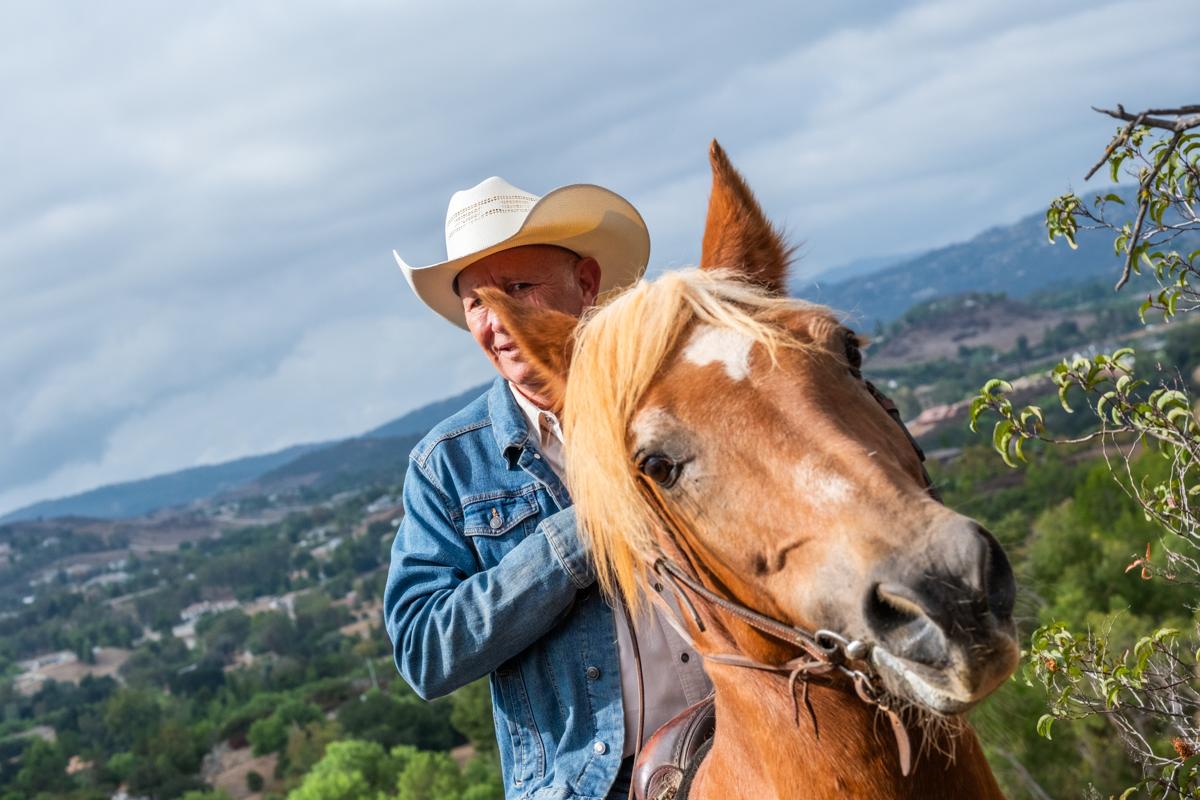
You're back at the trailer after the long climb. You loosen the girth, and your horse stands there blowing, flanks going in and out. You watch for a minute and think, "He's fine." Or maybe, "That took more out of him than last month." If you've ever wondered how to measure horse recovery, that minute at the trailer is where it starts.
Most riders don't carry a stethoscope. They don't write down respiration rates or time how long the sweat takes to dry. They look, they put a hand on the horse, and they go by feel. That's not laziness. That's how horse people have always done it.
The trouble isn't the looking. It's the remembering. "He seemed a bit tired" is useful today. Six weeks from now, when you're trying to tell whether he's getting fitter, it's gone.
How to measure horse recovery with your eyes and hands
You already know the signs. Here's how to read them a bit more deliberately, without turning it into a project.
Breathing. Stop at the top of a climb and watch the flanks. How long until the breathing settles to something close to normal for this horse? A minute? Five? You don't need an exact number. "Settled before I'd finished drinking from my water bottle" is a measurement you can compare next time.
Sweat. Where is it, and how much, for the weather? A damp patch under the saddle pad on a warm day is one thing. Sweat running down the neck and between the hind legs after an easy loop is another. Notice whether the coat has dried by the time you've untacked and put things away, or whether he's still wet when you leave.
The next morning. This is the one most riders skip, and it may tell you the most. Does he walk up to the gate, or wait for you? Is he eating like usual? Is he a bit stiff for the first few steps, then fine? On the next ride, are his ears forward, or does he feel flat and behind your leg?
Endurance riders and vets check heart rate with a stethoscope, and if you want numbers, that's the way to get them. Ask your vet what's normal for your horse. And if something about breathing, sweat or soundness looks wrong rather than just tired, call the vet. No app replaces that.
Why one ride tells you very little
A single ride is full of noise. It was hot. The footing was deep after rain. You went a different way because a gate was locked. Your horse was fresh because he'd had three days off. Any of those changes how hard he blows at the top of the hill.
Recovery only means something compared to something else: the same horse, on a similar ride, a few weeks ago. That's where memory falls short. Was the ridge loop five miles or seven? Did you trot the long hill last time, or walk it? Was that the week he was off his feed, or the week before?
Without that context, "he seemed tired" doesn't tell you if he's fitter, the same, or going backwards. With it, the same observation turns into a trend.
What EquiNex keeps track of for you
To be clear up front: EquiNex does not measure heart rate, and it does not give your horse a recovery score. There's no number that says "recovered." What it does is record the ride side of the picture automatically, so your own observations have something to sit next to.
Every ride, measured the same way
Start a ride and put the phone away. EquiNex records the route, distance, time and elevation, with or without cell signal. Afterwards you get distance, duration, average and max speed, elevation, and a map with a replay scrubber. A gait timeline shows walk, trot, canter and halt, detected from the phone's motion, and you can correct it if it got something wrong. Gaits are part of the paid plans after the first day.
That's what turns "a hard ride" into something you can compare: seven miles, 1,100 feet of climbing, a third of it at the trot. There's also a short AI "ride insight" on how intense the ride was, with one conditioning or recovery tip. It's based on the ride data, not on your horse's body, so read it alongside what you saw at the trailer.
The same loop, week after week
The easiest fair comparison is the same trail. One tap in ride history saves a finished ride as a trail in your library, and a new ride can retrace it with the route drawn on the map. Tag it "conditioning" or "hill loop" and you'll find it in seconds.
Ride that loop every couple of weeks and you have a simple test. Same distance, same climb. Is he doing more of it at the trot without you pushing? Is he settling quicker at the top? For the bigger picture, per-horse training insights show a ride heatmap, the share of time in faster gaits, and personal records like the longest ride and longest canter.
Want to note the moment itself? Drop a flag at the steep spot, or record a voice note right there: "Blowing hard at the top, settled after a couple of minutes." Voice notes are part of the paid plans and play back from the ride details. No typing with gloves on.
Notes the AI consultant can read back
The next-day check is the part that slips away fastest, so put it somewhere. A line in the horse's notes takes seconds: "Stiff first few steps, fine after. Ate up." Anyone on your barn team can add one too, so the person who does morning feed can say what they saw.
The AI consultant sees the horse's 15 most recent notes and the last 30 days of rides, so you can just ask: "How many rides did Nelson do this month, and what did I note afterwards?" or "Was he stiff after the ridge loop last time?" It answers from what's in the app, so it's only as good as the notes you keep, same as paper. The notes sit in his care record next to his vet visits, which helps when the vet asks how he's been. (More on asking your horse's records questions.)
A few seconds of your own
The app covers the ride. Your part is small:
- At the top of the big climb, stop and watch the flanks until the breathing settles. Count it in sips of water if you like.
- At the trailer, run a hand over the neck and under the pad. Wet or dry, warm or cool.
- Next morning, one line in his notes: how he came to the gate, how he ate, how he moved.
- Now and then, ride a saved loop again so you have a fair comparison.
That's it. No charts to fill in, no stopwatch on every hill.
Knowing how to measure horse recovery isn't really about numbers. It's about catching the horse who's quietly losing condition, or getting him fit for the long fall ride without overdoing it in August. The horse can't tell you he's tired. He shows you, a little at a time, and those small signs only add up if you still have the last ones to compare against.
Your eyes and hands do the measuring. EquiNex just makes sure that what you saw today is still there in six weeks, next to the ride that caused it.